5 Signs a Tree Is Too Close to Your House
A tree too close to your house can threaten the roof, walls, power lines and foundations, especially during Gulf Coast storms. In Mobile, AL, leaning trunks, cracked limbs, fungal growth, dead branches and lifting roots are warning signs that a professional should inspect the tree before it causes expensive damage.
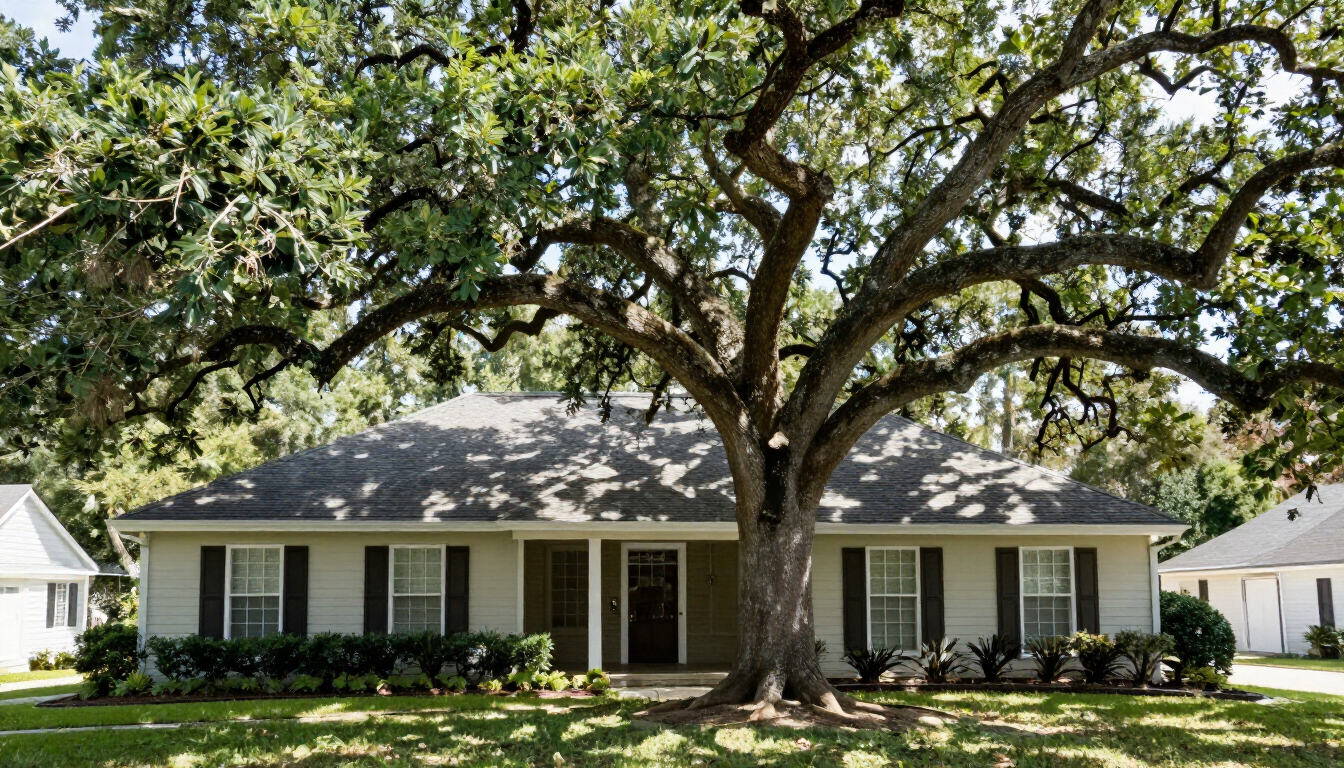
What are the signs a tree is too close to your house?
1. Is the trunk leaning towards the house?
A noticeable lean towards your roof, walls or driveway may indicate unstable roots or soil movement. Leaning can worsen after heavy rain, flooding or strong winds. Look for fresh soil cracks, exposed roots or a trunk angle that has changed since the last storm.
2. Are there cracks in the main limbs?
Deep splits, cavities and long cracks in major branches can signal structural weakness. A cracked limb above a bedroom, garage or walkway is an urgent concern because it may fail without much warning. Do not stand beneath it or attempt to cut it yourself.
3. Is there fungus growing at the base?
Mushrooms or shelf-like fungus around the trunk base can indicate decay below the bark or underground. Fungus does not always mean a tree must be removed, but it deserves a professional assessment, particularly when combined with leaning, cavities or soft wood.
Which tree problems should homeowners check overhead?
4. Are dead branches hanging above the roof?
Dead, brittle branches can break during ordinary wind and become dangerous projectiles during a tropical storm or thunderstorm. Check for bare limbs, loose bark, hanging branches and branches rubbing against the roof, gutters or utility lines.
Regular tree trimming and pruning can reduce some hazards, but pruning cannot correct every structural problem. A qualified tree professional should decide whether a limb can be safely removed or whether the whole tree requires attention.
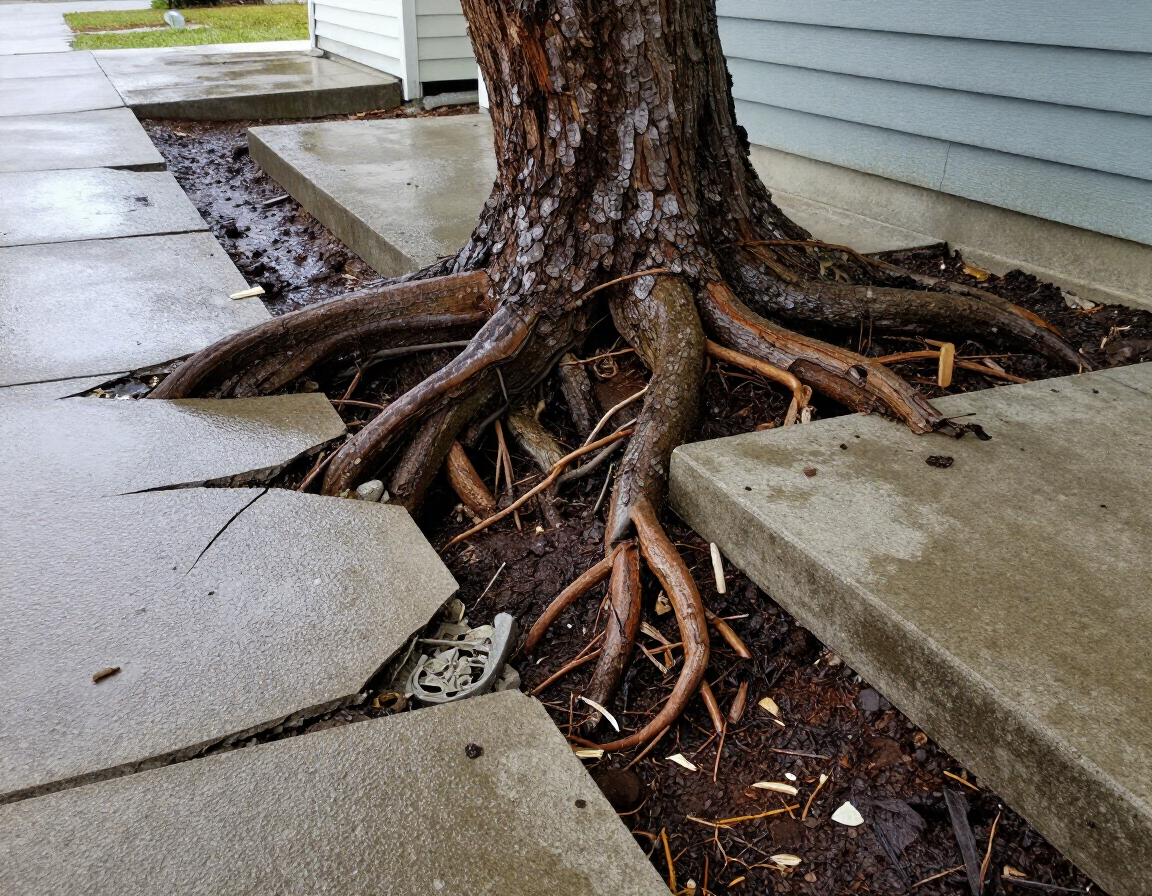
5. Are the roots lifting the ground?
Lifting roots may push up paving, damage foundations, create trip hazards or show that the tree is losing stability. Watch for raised soil, new cracks in paths, leaning root plates and roots pressing against walls or drainage features.
Why do storms increase tree risk in Mobile?
Mobile’s wind, heavy rain and saturated ground can place extra stress on mature trees. Wet soil may reduce root stability while gusts increase pressure on crowns and limbs. Trees that look acceptable in calm weather can become hazardous after a storm, especially when they already have decay, cracks or a lean.
After severe weather:
- Keep people and pets away from damaged trees.
- Check for branches touching power lines from a safe distance.
- Avoid parking or walking beneath damaged limbs.
- Photograph visible damage without approaching unstable areas.
- Arrange a professional inspection promptly.
For immediate storm hazards, see emergency storm response . If a tree has already fallen, debris cleanup may help restore safe access.
When should you call HFM Services?
Call HFM Services at (478) 494-7491 when a tree is leaning towards your home, has cracked primary limbs, shows base decay, has dead branches overhead or has lifting roots. You should also call after a storm if the tree has shifted, lost major limbs or is contacting your roof or utilities.
HFM Services can help assess whether the safest option is pruning, stabilisation or dangerous tree removal . Do not climb the tree or use a chainsaw near a house, unstable roots or power lines.
Key takeaway
A tree too close to your house is not defined only by distance. Its condition and direction of growth matter more. In Mobile, inspect mature trees for leaning trunks, cracked limbs, fungus, dead overhead branches and lifting roots, particularly after heavy rain or strong winds. If you spot one or more warning signs, keep clear and arrange an expert assessment. Contact HFM Services on (478) 494-7491 to discuss the safest next step before a damaged tree reaches your roof.



